Quick Answer
Belgrade’s wine scene is defined by the resurgence of indigenous grapes like Prokupac and Tamjanika. For the best selection, visit Vinoteka Beograd for expert guidance or head to the boutique shelves of local favorites that prioritize small-batch Serbian producers over mass-market labels.
- Prioritize indigenous grapes like Prokupac (red) and Tamjanika (white).
- Visit Vračar and Dorćol for the highest concentration of independent wine merchants.
- Always ask for “small-batch” or “boutique” labels to avoid generic supermarket stock.
Editor’s Note — Marcus Hale, Editor-in-Chief:
I firmly believe that if you’re drinking international Chardonnay in a city as culturally vibrant as Belgrade, you’re wasting your time. In my years covering this industry, I’ve seen too many travelers stick to the safe, globalized labels they recognize from back home. What most people miss is that the Balkan terroir is currently producing some of the most exciting, undervalued wine in Europe. I trust Charlie Walsh to guide you here because he understands that a great bottle isn’t about status, but about the story of the soil. Stop playing it safe and buy a bottle of local Prokupac tonight.
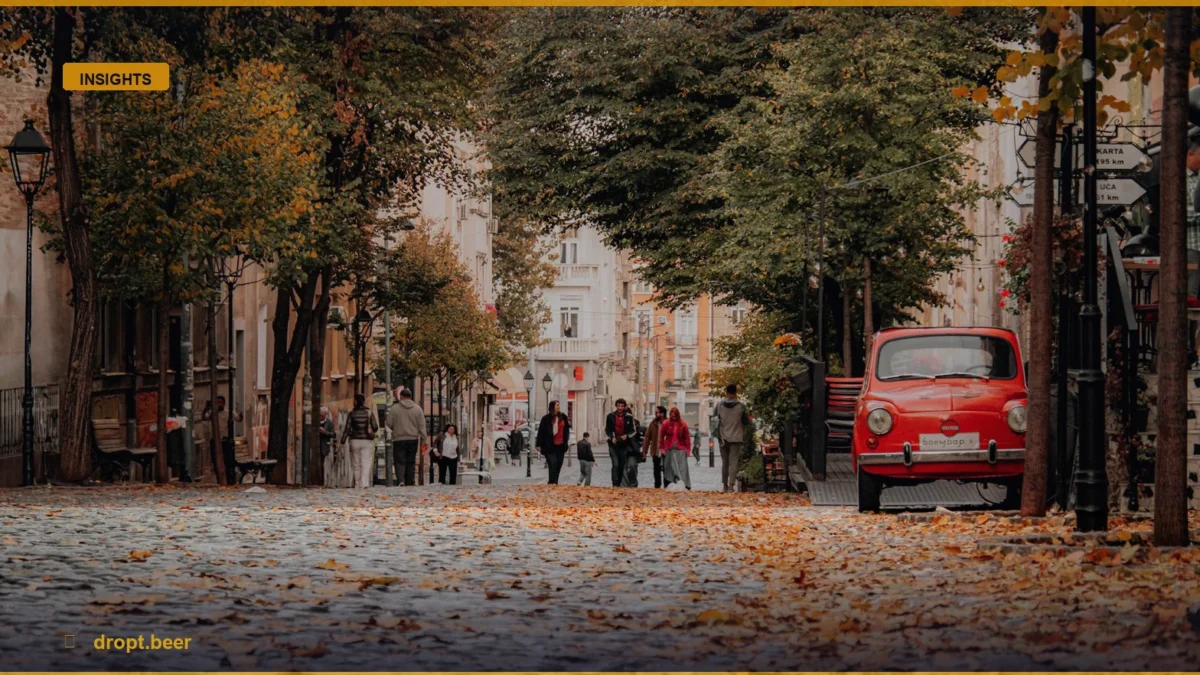
The scent of woodsmoke and roasted coffee hangs heavy in the air, drifting from the open doors of a kafana in Dorćol. It’s early evening. The sound of clinking glasses and animated chatter spills onto the pavement, a low-frequency hum that defines the rhythm of Belgrade. Most visitors walk past, eyes glued to their phones, hunting for the nearest sign of a familiar global brand. They’re missing the point entirely. If you want to understand the heartbeat of this city, you don’t look for what’s familiar. You look for the grapevines rooted deep in the Serbian hills.
Belgrade isn’t just a beer town, though the craft scene is undeniably sharp. It is a city of layers, and its wine shops are the best places to peel those layers back. My position is simple: if you are in Serbia, you drink Serbian wine. The industry has moved past the shadow of mass-produced, industrial-era swill. Today, we are seeing a genuine renaissance driven by winemakers who care more about their heritage than their export quotas. Ignoring these wines isn’t just a missed opportunity; it’s an insult to the history of the region.
The Resurgence of the Indigenous Grape
To grasp what’s happening in the glass, you have to look at the varieties. According to the Oxford Companion to Beer—and bolstered by local viticultural data—the revival of indigenous varietals is the single most important development in Eastern European wine. You’ll hear a lot about Vranac, the iron-fisted, dark-skinned red that grips your palate with a rugged intensity, but don’t overlook Tamjanika. This white grape is the showstopper. It’s aromatic, spicy, and carries a floral lift that manages to feel both ancient and entirely contemporary.
The BJCP guidelines for international wine styles might try to categorize these under broader headers, but Serbian wine refuses to be boxed in. It’s often earthy. It’s occasionally volatile in the best, most rustic way possible. When you walk into a reputable shop in Vračar, don’t ask for a Cabernet. Ask the clerk what they’re drinking on their night off. They’ll likely reach for a bottle of Prokupac. It’s a red that acts like a bridge between the elegance of a Pinot Noir and the brooding structure of a Malbec. It’s not just a drink; it’s the terroir of the Morava valley in liquid form.
Finding Your Haven: Where to Look
Navigating the city requires a bit of local intuition. You’ll find shops like Vinoteka Beograd, which has built its reputation on a foundation of deep, almost encyclopedic knowledge. This isn’t a place where you grab a bottle and sprint to the register. It’s a classroom. When you enter, tell them your preferences, but be prepared for them to challenge your palate. If you claim to hate acidic wines, they’ll hand you a crisp white that will make you rethink your entire life history. That’s the kind of service that keeps a scene alive.
Then there are the smaller, more intimate spots like The Wine & Co. in Dorćol. Here, the focus shifts toward organic and biodynamic practices. There’s a quiet, intense dedication to the environment that permeates the shelves. They aren’t interested in mass-produced labels. They want to show you the producer who is working with minimal intervention, letting the vintage speak for itself. It feels personal. It feels like you’re sitting in the living room of someone who truly loves what they do. That connection—the link between the hand that pruned the vine and the hand that poured the glass—is exactly what we celebrate at dropt.beer.
The Ethics of the Purchase
There’s a temptation to treat wine shopping like a transaction. You go in, you buy, you leave. Don’t do that. Treat it like a conversation. Ask about the producer. Ask about the year. Serbia has had its share of volatile weather, and the vintage variation can be significant. A shop that is honest about a difficult year is a shop you can trust with your wallet. If they’re trying to push everything as a “great vintage,” walk out the door.
You’ll notice that some of the best wine selections in the city are found in places that might surprise you. Some craft beer bars, for instance, have started curating small, high-quality wine lists because they understand that the customer who appreciates a well-balanced farmhouse ale is often the same person who appreciates a natural, unfiltered wine. It’s about the philosophy of the product, not just the category. Seek out the curators, not the retailers.
Your Next Move
Stop buying the big-name labels and commit to tasting three distinct indigenous Serbian varietals this week.
- [Immediate — do today]: Visit a local independent wine merchant in Vračar or Dorćol and ask specifically for a bottle of Prokupac from a small-batch producer.
- [This week]: Pair that Prokupac with a traditional Serbian meal; the acidity and tannins are specifically built to cut through the richness of local smoked meats.
- [Ongoing habit]: Keep a simple tasting journal of the Serbian grapes you try, noting which winemakers prioritize minimal intervention techniques.
Frequently Asked Questions
Is Serbian wine better than French wine?
“Better” is the wrong lens. Serbian wine is more distinct. It offers unique indigenous grapes like Prokupac that you cannot find anywhere else in the world. While France has prestige and centuries of established classification, Serbia offers an exciting, undiscovered character that is currently outperforming its price point significantly.
Should I look for organic wines in Belgrade?
Absolutely. The movement toward organic and biodynamic viticulture in Serbia is growing rapidly. Many smaller, artisanal producers are embracing these methods because they highlight the specific terroir of the Balkan mountains. If you see a label denoting organic practices, it’s almost certainly worth the premium.
What is the best way to store Serbian wine?
Treat it like any fine wine: keep it away from direct sunlight, maintain a consistent cool temperature (around 12-15°C), and store it on its side if it has a natural cork. Serbian reds like Vranac can benefit from a little time in a cellar, but most white wines like Tamjanika are best enjoyed young and fresh.